


Diving Komodo Islands: 9 Best Dive Sites in Komodo
Best dive sites in Komodo
Diving Komodo Islands: Discover the Best Dive Sites in Komodo National Park
Discover diving Komodo Islands and the best dive sites in Komodo National Park, from Manta Point and Batu Bolong to Castle Rock, Crystal Rock and Manta Alley.
There is a reason divers from around the world travel to Flores to experience diving in the Komodo Islands. Above the surface, Komodo National Park is famous for ancient islands, dramatic cliffs, pink beaches, and the legendary Komodo dragon. But beneath the water, another world begins — one shaped by powerful currents, nutrient-rich seas, colorful coral reefs, enormous schools of fish, turtles, sharks, and manta rays. Komodo is not simply a place where you go underwater and look around.
Komodo diving is about moving with the ocean.
The currents bring nutrients through narrow channels between the islands, creating an extraordinary underwater ecosystem. One moment you may be watching a manta ray glide effortlessly above the reef. A few minutes later, you could find yourself surrounded by thousands of reef fish or watching reef sharks patrol the blue. If you are searching for the best dive sites in Komodo, this guide will take you beyond the usual checklist and show you what makes each site special.
Why Is Diving in Komodo Islands So Special?
Komodo National Park sits between the warm waters of the Flores Sea and the cooler waters influenced by the Indian Ocean. This unique geography creates strong water movement and nutrient-rich currents that support an impressive concentration of marine life.
For divers, this means one thing:
More life.
Komodo’s underwater landscapes change dramatically from one location to another. You can dive along colorful coral walls, explore underwater pinnacles, drift over sandy bottoms where manta rays feed, or descend into colder southern waters filled with macro creatures. The experience can be completely different from one dive to the next and that is what makes scuba diving in Komodo so addictive.
The Best Dive Sites in Komodo
Komodo National Park has dozens of named dive sites, but several have become legendary among divers. From manta rays to sharks and spectacular coral walls, each site offers its own personality.
Here are some of the best dive sites in Komodo to put on your diving itinerary.
1. Manta Point – Meet Komodo's Gentle Giants
If there is one creature many divers dream of seeing in Komodo, it is the manta ray. Manta Point, also known as Karang Makassar, is one of the park’s most famous places for manta encounters. The site is relatively shallow compared with some of Komodo’s more demanding dive sites, making it possible to spend more time observing these incredible animals. Manta rays often move over sandy areas and cleaning stations, where smaller fish help remove parasites from their bodies. When a manta approaches, the experience can feel almost surreal. There is no cage, no aquarium glass, and no barrier between you and the animal. Just you, the ocean, and a manta several meters wide slowly passing through the blue. Manta sightings are never guaranteed on any particular dive because they are wild animals, but Karang Makassar is one of Komodo’s signature manta locations.
Best for: Manta rays, underwater photography, drift diving.
2. Batu Bolong – A Small Rock With a Huge Underwater World
From the surface, Batu Bolong doesn’t look particularly impressive. It is essentially a small rocky pinnacle surrounded by deep water. Underneath, however, it becomes a completely different story. The walls of Batu Bolong are covered with colorful coral, sea fans, sponges, and dense reef fish. Turtles, trevally, reef sharks, and other pelagic species may appear in the blue.
The challenge is the current.
Batu Bolong is exposed to water movement from the surrounding channels, and currents can become strong around the pinnacle. Experienced divers usually stay on the protected side of the rock and follow the dive plan carefully. This is one of those dive sites where good buoyancy control matters as much as your camera. For experienced divers, Batu Bolong can be one of the most memorable dives in Komodo.
Best for: Experienced divers, coral lovers, underwater photographers, reef fish.
3. Castle Rock – Where the Ocean Gets Wild
If Manta Point represents the graceful side of Komodo, Castle Rock represents its wild side. This submerged pinnacle in northern Komodo is famous for strong currents, schooling fish, trevallies, barracuda, eagle rays, and reef sharks. The action happens around the pinnacle as large fish use the current to hunt. Look into the blue and you may see sharks moving through the water column. Look toward the reef and you can find clouds of smaller fish covering the coral. Castle Rock is not a site to rush into without experience. Conditions can change quickly, and local guides play an important role in choosing the safest entry point and dive route.
Best for: Advanced divers, sharks, pelagic encounters, large schools of fish.
4. Crystal Rock – Color, Fish and Current
Close to Castle Rock, Crystal Rock offers another spectacular northern Komodo diving experience. The reef is surrounded by colorful coral and schools of reef fish, while the deeper blue can bring encounters with larger marine life. For underwater photographers, Crystal Rock is particularly attractive because there is so much happening at different distances — small reef fish close to the coral, larger fish cruising around the pinnacle, and occasionally sharks or rays passing in the background. The current can still be significant, so divers should listen carefully to their guide and understand the conditions before entering.
Best for: Coral reefs, reef fish, sharks, underwater photography.
5. Siaba Besar – A Different Side of Komodo
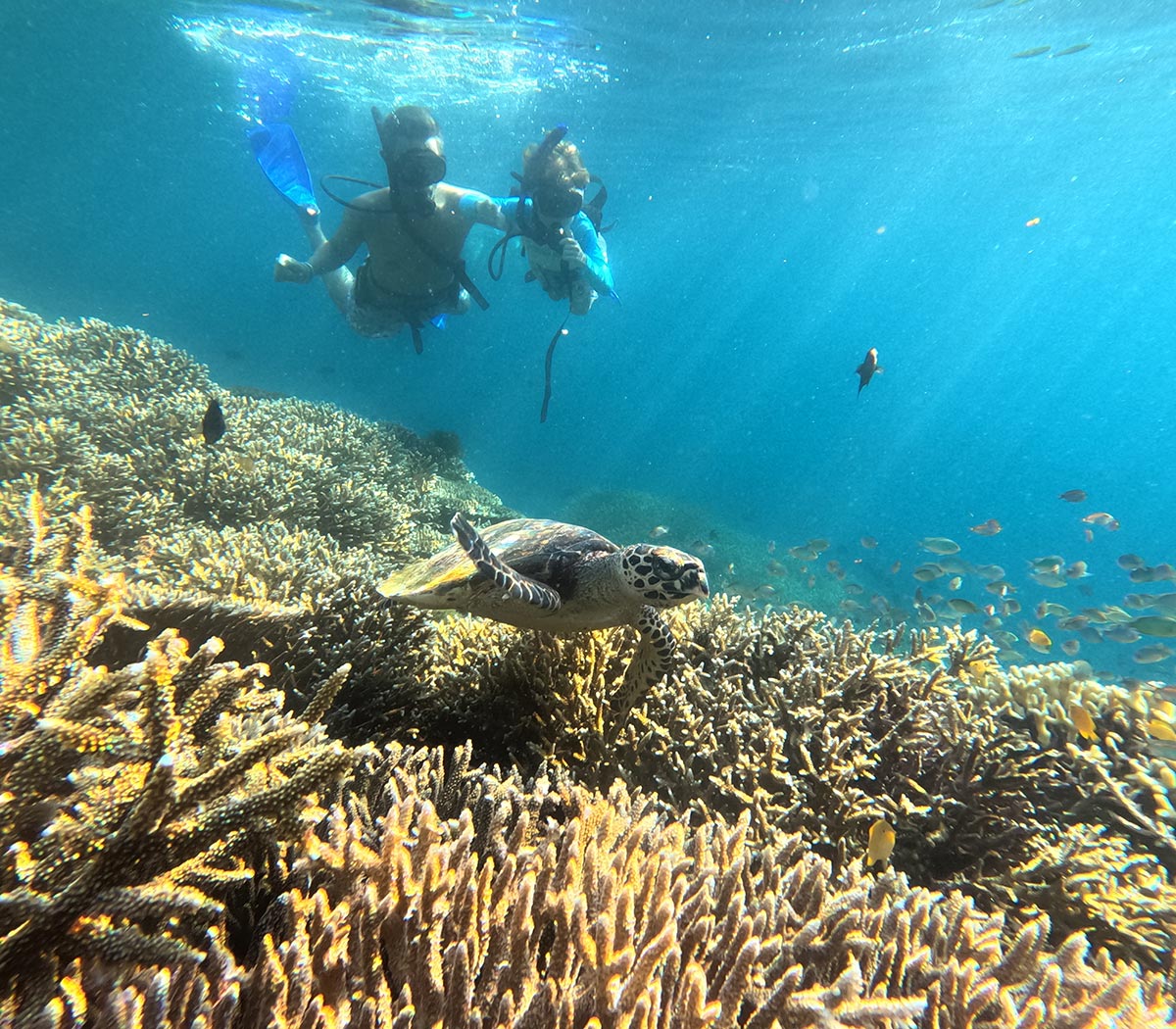
Not every dive in Komodo has to be an adrenaline rush. Siaba Besar is often associated with calmer diving and turtle encounters. Its more sheltered environment provides a welcome contrast to the stronger-current sites in northern Komodo. Green turtles are one of the highlights here, while the reef and sandy areas can also reveal smaller marine creatures. For divers who want to slow down and observe rather than constantly fight the current, Siaba Besar can be a beautiful part of a Komodo diving itinerary. It is also a good reminder that Komodo is not only about big animals. Sometimes the best moment is simply hovering above a reef and watching a turtle slowly disappear into the blue.
Best for: Turtles, relaxed diving, marine life photography.
6. Tatawa Besar – Drift With the Current
Tatawa Besar is another favorite for divers who enjoy drift diving. Instead of swimming against the current, you allow the ocean to carry you along the reef while observing coral, sponges, reef fish, and other marine life. The colorful soft corals create a beautiful underwater landscape, particularly when sunlight reaches the reef. For many divers, Tatawa Besar provides a perfect introduction to the unique style of diving that makes Komodo famous.
Best for: Drift diving, colorful coral, reef fish and photographers.
7. The Cauldron – For Divers Looking for Adrenaline
Some divers come to Komodo for peaceful reef dives. Others want something completely different. The Cauldron, also known as Shotgun, is famous for its fast-moving current through a channel. The current can accelerate as it passes through the narrow underwater landscape, creating an exhilarating ride for experienced divers. This is not a site where you simply jump in and hope for the best. Proper briefing, buoyancy control, experience with current, and following your guide are essential. But when the conditions are right, the feeling of being carried through the channel by the ocean is unforgettable.
Best for: Experienced divers, drift diving and underwater adventure.
8. Manta Alley – Into Southern Komodo
For divers staying longer in Komodo, the journey south can reveal an entirely different underwater environment. Manta Alley is known for manta encounters and the colder, nutrient-rich waters of southern Komodo. The southern region operates somewhat differently from the northern dive areas, with conditions and seasonal patterns that can influence which sites are visited. The reward can be extraordinary. Mantas moving through cooler green water, dramatic volcanic landscapes, and reefs packed with marine life create a very different atmosphere from the warmer northern sites. This is one reason a Komodo liveaboard diving trip can be so rewarding: you can reach areas that are difficult to experience on a short day trip from Labuan Bajo.
Best for: Manta rays, experienced divers, liveaboard adventures.
9. Cannibal Rock – A Paradise for Macro Lovers
Komodo is famous for manta rays and sharks, but macro photographers have another reason to come here. Cannibal Rock, in the southern part of the park, is known for rich coral growth and fascinating small marine creatures. Look carefully and you may discover nudibranchs, frogfish, pygmy seahorses, crinoids, and other tiny creatures hiding among the reef. This is the kind of dive where slowing down completely changes what you see. Instead of searching for something enormous in the blue, you start looking at a few centimeters of coral and suddenly, an entire universe appears.
Best for: Macro photography, nudibranchs, frogfish and small marine life.
North or South Komodo: Which Should You Dive?
One of the most interesting things about diving Komodo Islands is that the north and south can feel like two different destinations.
Northern Komodo
Northern sites such as Castle Rock, Crystal Rock and The Cauldron are famous for stronger currents, schooling fish, sharks and dramatic underwater action.
Central Komodo
Central areas around Batu Bolong, Manta Point, Siaba Besar and Tatawa offer a wider variety of diving, from manta encounters to colorful reefs and turtle dives.
Southern Komodo
Southern sites such as Manta Alley and Cannibal Rock are known for cooler, nutrient-rich water, manta encounters and exceptional macro life.
This difference is important when planning your trip.
The best dive site in Komodo depends on what you want to see.
When Is the Best Time for Diving in Komodo Islands?
Komodo can be dived throughout the year, but conditions vary between different parts of the park. The northern and central areas are often favored during the drier months, while southern Komodo follows a different seasonal pattern. Currents, tides, wind, visibility and water temperature can all affect the daily diving conditions. For this reason, experienced dive operators do not simply follow a fixed itinerary. They watch the ocean. A good Komodo dive plan considers the tide, current direction, weather and diver experience before deciding where to dive.
That flexibility is part of what makes diving here special.
Is Komodo Good for Beginner Divers?
Yes — but with an important condition. Komodo is famous for current diving, and some of its most iconic sites are better suited to intermediate or advanced divers. Sites such as Batu Bolong, Castle Rock and The Cauldron can involve strong or changing currents and require appropriate experience. Meanwhile, areas such as Siaba Besar and some sheltered reefs can offer gentler conditions.
If you are a beginner, the best approach is not to ask:
“Can beginners dive Komodo?”
Instead, ask:
“Which Komodo dive sites are suitable for my experience level today?”
A professional local dive guide can help match the site to your certification, experience and current conditions.
Day Trip or Liveaboard for Komodo Diving?
If you only have a short time in Labuan Bajo, a day trip can introduce you to several of the central and northern dive sites. But if you want the full experience, a Komodo diving liveaboard offers a different level of adventure. Imagine waking up on the boat with the islands around you. No long transfer from a hotel. No need to return to Labuan Bajo after every dive. Just breakfast, a dive briefing, the ocean, and another island waiting beyond the horizon. A multi-day liveaboard can also make it easier to combine different regions of the park and reach southern destinations that are less practical as day trips. For divers who want to experience Komodo beyond the famous highlights, this is often the better way to travel.
More Than Just a Dive Destination
What makes Diving Komodo Islands different is not only the number of species you can encounter. It is the relationship between the islands and the ocean. The same current that makes a dive challenging is also responsible for bringing nutrients into the reef. The same narrow channels that create difficult conditions are also where large schools of fish gather. The same cold southern water that may make you reach for a thicker wetsuit can create extraordinary coral and macro environments. Komodo does not try to make diving easy.
It makes diving unforgettable.
Plan Your Komodo Diving Adventure
From manta rays at Manta Point to the colorful walls of Batu Bolong, shark encounters at Castle Rock and the macro wonders of southern Komodo, the best dive sites in Komodo offer something for almost every type of diver. But the real magic happens when you stop thinking of Komodo as a list of dive sites.
Think of it as an underwater journey, One island, One current, One dive at a time and when you finally return to the surface, with the sun setting behind the islands and the boat waiting nearby, you may understand why so many divers come to Komodo once — and start planning their next trip before they even leave.
Komodo is not just somewhere you dive.
It is somewhere you experience.