




Komodo Dragon Indonesia: Wildlife & Travel Guide
Komodo Dragon Indonesia
Komodo Dragon Indonesia: Discover the World's Largest Living Lizard in the Wild
Discover Komodo dragon Indonesia, the world's largest living lizard. Explore Komodo National Park, wildlife habitats, island trekking, and boat trips from Labuan Bajo.
Imagine walking across a rugged island where ancient volcanic hills meet turquoise waters, wild deer move through dry savannah, and a powerful reptile rests quietly beneath the shade of a tree. This is not a scene from a prehistoric documentary. It is a real experience waiting for you in Komodo National Park, Indonesia, home to the legendary Komodo dragon.
The Komodo dragon in Indonesia is one of the most extraordinary animals on Earth. As the world’s largest living lizard, it attracts wildlife enthusiasts, photographers, adventure seekers, and curious travelers from around the globe. But seeing a Komodo dragon is about more than spotting a rare animal. It is an opportunity to explore a remarkable landscape where wildlife, island culture, and marine biodiversity exist side by side.
Located in East Nusa Tenggara, Indonesia, Komodo National Park offers a unique combination of wildlife encounters, dramatic hiking trails, pristine beaches, and unforgettable ocean adventures. For travelers visiting Labuan Bajo, exploring the natural habitat of the Komodo dragon can become the highlight of an Indonesian journey.
Where Can You See Komodo Dragons in Indonesia?
Komodo dragons live naturally on several islands in southeastern Indonesia, particularly within and around Komodo National Park. Their best-known habitats include Komodo Island and Rinca Island, both accessible from Labuan Bajo in Flores.
These islands feature a distinctive landscape of dry tropical forests, open grasslands, rolling hills, and coastal forests. Unlike the lush rainforests many visitors associate with Indonesia, the terrain around Komodo often appears golden and dry during the dry season, creating a striking backdrop for wildlife photography.
Komodo Island
Komodo Island is one of the most famous destinations for seeing Komodo dragons in the wild. Its rugged hills, quiet beaches, and natural vegetation provide habitat for these impressive reptiles.
Visitors generally explore designated trekking routes with authorized park guides or rangers. Along the way, they may encounter Komodo dragons resting near shaded areas or moving through the surrounding landscape. Sightings are never guaranteed, because these are wild animals living in their natural environment.
Beyond its famous inhabitants, Komodo Island offers breathtaking views of the surrounding sea and neighboring islands, making the visit memorable even before a dragon appears.
Rinca Island
Rinca Island is another important habitat for Komodo dragons and a popular stop on many boat trips from Labuan Bajo. Its open savannah and hilly terrain provide opportunities to observe wildlife in a dramatic natural setting. Depending on the route, visitors may also see deer, water buffalo, wild pigs, and numerous bird species. Rinca offers a different atmosphere from Komodo Island, but both destinations provide a valuable opportunity to understand how these remarkable reptiles survive in a challenging island ecosystem.
Other Natural Habitats
Komodo dragons also occur on Flores and several smaller islands in the region. However, the possibility of seeing them varies by location, and not every island visited on a typical Komodo tour is a dragon habitat. For most travelers, a guided visit to Komodo Island or Rinca Island is the most practical way to learn about the species while following established wildlife safety procedures.
What Makes the Komodo Dragon So Special?
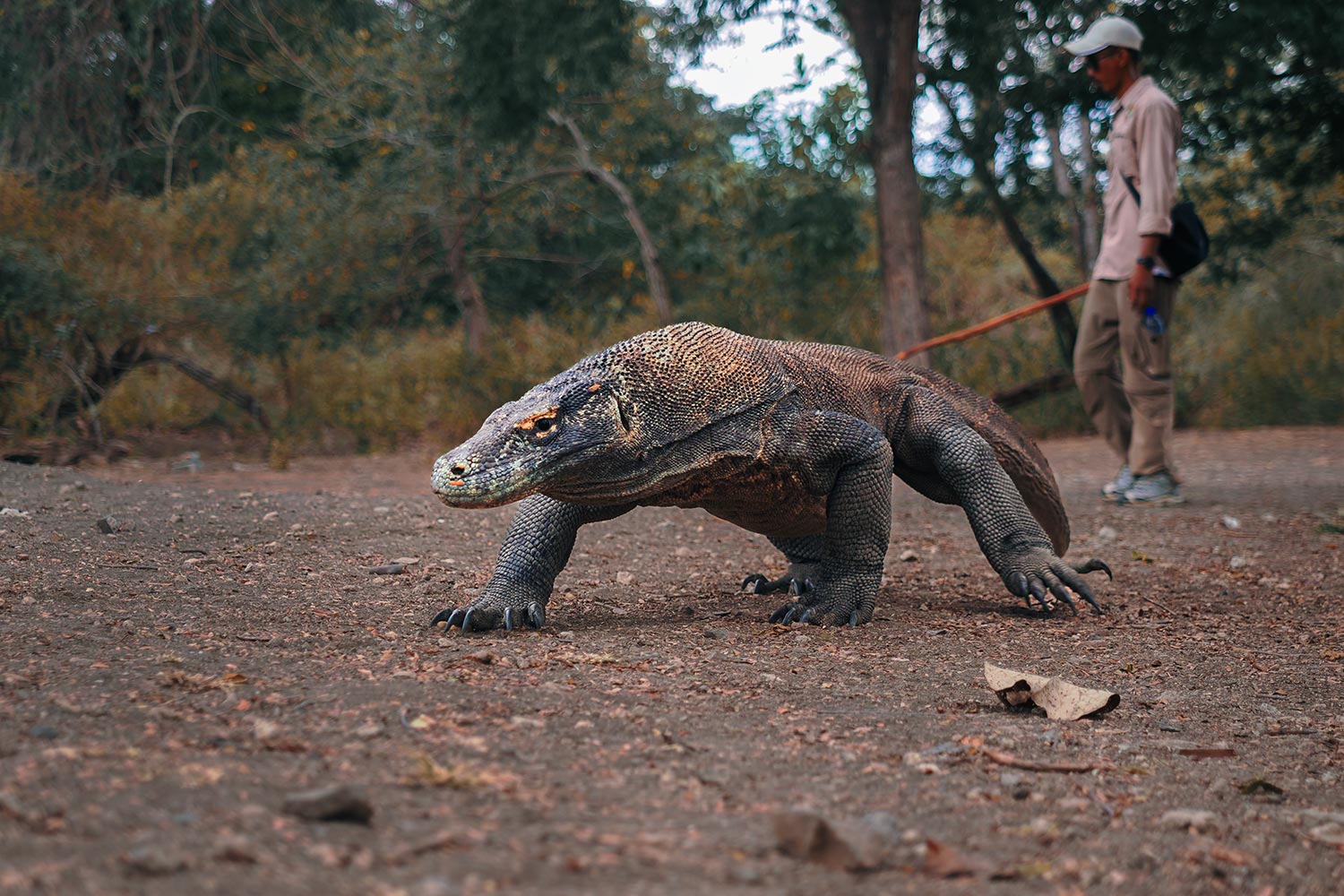
The Komodo dragon (Varanus komodoensis) is the largest living lizard species in the world. Adult individuals can grow to around three meters long, although size varies considerably, and large specimens may weigh more than 70 kilograms. Despite their heavy bodies, Komodo dragons can move surprisingly quickly over short distances. They possess powerful limbs, muscular tails, sharp claws, and a keen sense of smell that helps them locate food across their habitat.
Their appearance is impressive, but their biology is even more fascinating.
A Powerful Predator With a Remarkable Sense of Smell
Komodo dragons use their forked tongues to collect scent particles from the air. By transferring these particles to a specialized sensory organ in the roof of the mouth, they can detect chemical signals and locate potential food sources. This ability helps them find carrion and track prey over considerable distances under suitable conditions.
Their diet includes deer, wild pigs, smaller animals, and carrion. Larger dragons can also prey on substantial animals, demonstrating their role as important predators within their ecosystem.
Venom and Their Hunting Strategy
Komodo dragons have venom-producing glands that contribute to the effects of their bites. Their teeth are sharp and serrated, helping them inflict serious wounds on prey. Rather than relying only on brute strength, these reptiles combine powerful bites, tracking behavior, and patience. They may follow injured prey, although hunting outcomes vary and not every attack is successful.
This combination of physical power and specialized biology has made the Komodo dragon one of the most studied reptiles in the world.
A Long Life in a Challenging Environment
Komodo dragons are adapted to the seasonal conditions of their native islands. They can regulate their body temperature by moving between sunny and shaded areas, and they may become less active during periods of intense heat. They also play a vital ecological role by helping regulate prey populations and consuming carrion. Their survival is closely connected to the health of the island habitats they occupy.
Komodo Dragons and Their Prehistoric Appearance
One reason people are fascinated by Komodo dragons is their ancient appearance. Their strong bodies, armored-looking scales, and deliberate movements can make them seem like creatures from another age. However, Komodo dragons are not dinosaurs. They are modern reptiles belonging to the monitor lizard family, with an evolutionary history shaped by millions of years of adaptation.
Their survival in a relatively small part of Indonesia makes them especially significant for conservation and scientific research. For travelers, seeing a Komodo dragon in the wild offers a rare connection to the natural world. It is a reminder that some of the planet’s most extraordinary wildlife still survives outside zoos and controlled environments.
Best Time to See Komodo Dragons in Indonesia
Komodo dragons can be observed throughout the year, but weather conditions can influence the overall travel experience.
Dry Season: April to October
The dry season is generally a popular period to explore Komodo National Park. The weather often provides favorable conditions for boat trips, island trekking, snorkeling, and photography. During the drier months, the landscape can become brown and golden, creating beautiful contrasts with the blue ocean. Travelers should prepare for strong sunlight, limited shade, and hot conditions on exposed trails.
Rainy Season: November to March
The rainy season can bring greener hills and a different atmosphere to the islands. Rainfall, wind, and sea conditions may affect boat schedules and outdoor activities. Traveling during this period can still be rewarding, but itineraries may need greater flexibility. Always check current marine conditions and follow advice from your boat operator and local authorities.
Travel tip: There is no guaranteed season for spotting Komodo dragons. Wildlife sightings depend on natural behavior, location, weather, and other environmental factors.
How to Visit Komodo Dragon Indonesia From Labuan Bajo
Labuan Bajo, a coastal town on Flores Island, is the main gateway to Komodo National Park. It has an airport, accommodation options, restaurants, and boat operators offering trips to the surrounding islands. For many visitors, the most enjoyable way to explore the region is by boat. Instead of visiting a single island and returning immediately, travelers can combine wildlife trekking with snorkeling, beach visits, and scenic cruising.
Option 1: A Day Trip to Komodo National Park
A day trip is suitable for travelers with limited time. Depending on the operator, route, and weather, the itinerary may include a guided Komodo dragon trek, a viewpoint, a beach, or a snorkeling stop. The advantage is convenience. However, the number of destinations you can visit is limited by travel distances and the day’s schedule.
Option 2: A 3-Day, 2-Night Komodo Boat Trip
For a more immersive experience, a 3-day, 2-night Komodo boat trip allows you to explore multiple destinations at a more relaxed pace.
A typical itinerary may include:
- Day 1: Depart from Labuan Bajo, visit selected islands, enjoy snorkeling, and watch the sunset from the boat.
- Day 2: Explore Komodo or Rinca Island with an authorized guide, visit scenic viewpoints, and discover more beaches or snorkeling locations.
- Day 3: Enjoy a final island stop or snorkeling session before returning to Labuan Bajo.
Exact destinations depend on the boat operator, park regulations, weather, tides, and sea conditions. Not every itinerary includes every location, and wildlife sightings cannot be guaranteed. A liveaboard trip also lets you experience the islands at different times of day, from quiet mornings on deck to spectacular sunsets over the surrounding hills.
Option 3: Private Komodo Boat Charter
A private charter may suit couples, families, photographers, or groups who prefer a more flexible schedule. Depending on the package, guests may be able to discuss preferred stops, snorkeling interests, and the overall pace of the journey with the operator. All routes remain subject to safety requirements, park regulations, and local conditions.
Whether you choose a day trip or a multi-day sailing adventure, visiting Komodo dragons with a knowledgeable guide helps you understand the animals and their environment more deeply.
What Else Can You Experience in Komodo National Park?
Komodo dragons may be the main attraction, but they are only one part of the region’s natural beauty.
Padar Island: A View Worth the Climb
Padar Island is famous for its dramatic ridgelines and panoramic views over curved bays and contrasting beaches. The climb can be steep, especially under the tropical sun, but the scenery makes it a favorite stop for photographers and hikers. Padar is not a destination for observing Komodo dragons on a typical visitor trek. Its appeal lies in the landscape and the extraordinary views across the surrounding islands.
Pink Beach: A Rare Coastal Landscape
Pink Beach is known for its distinctive pinkish sand, created by a mixture of pale sand and reddish fragments from marine organisms. The color varies with the light, water conditions, and the exact stretch of beach. Visitors can relax on the shore, photograph the coastline, or snorkel where conditions and local rules permit.
Manta Point: Encounters Beneath the Surface
The waters around Komodo National Park support an impressive diversity of marine life, including manta rays. At suitable locations and under favorable conditions, visitors may have the opportunity to observe these graceful animals while snorkeling or diving. Manta encounters are never guaranteed, and currents can be strong. Always follow your guide’s instructions and choose activities appropriate for your swimming ability.
Taka Makassar: A Sandbar in Turquoise Water
Taka Makassar is a small sandbar surrounded by shallow turquoise water. Its shape and exposed area change with the tides, giving it a different appearance throughout the day. It is a popular stop for photographs and relaxing coastal scenery when weather, tides, and the itinerary allow. Together, these destinations reveal why Komodo National Park is much more than a wildlife destination. It is a place where terrestrial and marine ecosystems create an unusually diverse travel experience.
Is It Safe to See Komodo Dragons in the Wild?
Seeing Komodo dragons in their natural habitat is an unforgettable experience, but it requires caution and respect. Komodo dragons are wild predators and can be dangerous. Visitors should never approach, touch, feed, provoke, or attempt to photograph them from an unsafe distance.
Follow these essential guidelines:
- Stay with your authorized park guide or ranger throughout the trek.
- Keep the distance instructed by your guide and never attempt to get closer for a photograph.
- Do not run toward or away from a dragon, and follow the ranger’s directions if one approaches.
- Avoid loud disturbances, feeding wildlife, or blocking an animal’s movement.
- Wear comfortable walking shoes, sun protection, and suitable clothing.
- Bring drinking water and prepare for hot weather.
- Follow all current park regulations and any temporary access restrictions.
Women who are pregnant or menstruating should inform their guide if requested by the park’s procedures, so the guide can provide the appropriate instructions and assess any relevant safety considerations.
The most important principle is simple: you are visiting the Komodo dragon’s home, not entering an attraction where wildlife is expected to perform on demand.
Conservation: Protecting Indonesia's Living Dragon
Komodo dragons are classified as Endangered on the IUCN Red List. Their long-term survival depends on protecting suitable habitat, maintaining healthy prey populations, and managing human activity responsibly. Habitat changes, climate-related pressures, human-wildlife interactions, and the effects of a changing environment can create challenges for the species and the ecosystems it inhabits.
Komodo National Park plays an important role in protecting this extraordinary wildlife. Responsible tourism can contribute to conservation by supporting local livelihoods, encouraging environmental awareness, and helping visitors appreciate the value of intact natural habitats. Travelers can make a positive difference by following park rules, choosing responsible operators, avoiding wildlife disturbance, and respecting local communities.
The future of the Komodo dragon is not only a concern for Indonesia. It is part of a broader global effort to protect biodiversity for future generations.
What Should You Bring for a Komodo Dragon Tour?
Preparing well can make your trip more comfortable, particularly during island treks and boat excursions.
Consider packing:
- Comfortable walking shoes with good grip.
- A hat, sunglasses, and high-SPF sunscreen.
- Reusable drinking water and a refillable bottle where practical.
- Lightweight, breathable clothing.
- A camera or smartphone with sufficient battery power.
- Swimwear and a towel if snorkeling is included.
- Motion-sickness medication if recommended by your healthcare professional and appropriate for you.
- Cash for incidental expenses where card payments may not be available.
Before departure, confirm what your tour package includes, such as meals, drinking water, snorkeling equipment, park entrance fees, guides, and transfers. Inclusions vary between operators.
Why Komodo Dragon Indonesia Belongs on Your Travel Bucket List
Some destinations are memorable because of their beaches. Others are famous for their culture, mountains, or underwater world. Komodo National Park brings these experiences together in one remarkable corner of Indonesia. Here, you can watch the morning light fall across rugged hills, follow a ranger through the habitat of the world’s largest living lizard, snorkel in tropical waters, and spend the evening watching the sky change color from the deck of a boat.
The experience feels different from an ordinary sightseeing tour because the landscape remains wild and the wildlife is unpredictable. Each island has its own character, and every journey offers a new perspective on Indonesia’s natural heritage. For anyone planning a trip to Flores or Labuan Bajo, discovering the Komodo dragon is an opportunity to experience a side of Indonesia that cannot be fully understood through photographs alone.
Plan Your Komodo Dragon Adventure
Ready to discover the legendary Komodo dragon in Indonesia?
Start your journey in Labuan Bajo and choose the experience that suits your travel style, whether it is a short island excursion, a shared 3-day, 2-night sailing trip, or a private boat charter. Explore dramatic islands, enjoy beautiful ocean views, discover colorful underwater landscapes, and learn about one of the world’s most fascinating reptiles with the guidance of local professionals.
Your Komodo adventure begins in Labuan Bajo — where extraordinary wildlife meets the beauty of the Indonesian archipelago.